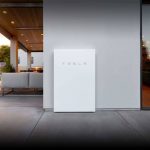
New South Wales homeowners looking to cut electricity bills and gain blackout protection have access to one of Australia’s strongest combinations of federal and state clean-energy incentives. Unlike Victoria, which enforces strict household income caps and property value limits on state solar rebates, New South Wales offers point-of-sale discounts with no household income cap and no property valuation ceiling across its core solar, battery, heat pump, and air conditioning programs.
With the Federal Cheaper Home Batteries discount scheduled to step down on 1 January 2027, understanding how these programs stack together can save you thousands of dollars upfront.
Compare every active incentive side by side on the Sunrise Innovations NSW & Victoria Rebates Page.
| Program & Scope | Upfront Value & Rate | Income Cap | Eligible Upgrades |
|---|---|---|---|
| Federal Discount Cheaper Home Batteries (STCs) |
~$252 / usable kWh before 1 Jan 2027 Steps down to ~$215 / kWh (Jan–Jun 2027) |
No Income Cap | Approved VPP-capable solar batteries (5kWh–50kWh usable) |
| NSW VPP Bonus Peak Demand Reduction (PDRS) |
~$36–$40 / usable kWh Up to ~$1,050 (calculated up to 28kWh) |
No Income Cap | Grid-connected batteries (2kWh–50kWh) joined to an approved VPP |
| Federal Discount Solar Panel STCs |
~$350–$450 / kW installed Deducted upfront based on NSW zone |
No Income Cap | New rooftop solar PV arrays & system expansions |
| 0% Finance NSW Home Energy Saver Loan |
Up to $15,000 at 0% interest Flexible terms up to 10 years (Brighte / Plenti) |
<$150,000 / yr | Solar panels, home batteries, heat pumps & EV chargers |
| NSW Hot Water Energy Savings Scheme (ESS) |
Up to $640 (electric swap) Up to $330 off gas hot water replacements |
No Income Cap | Approved high-efficiency heat pump hot water systems |
| NSW HVAC ESS & PDRS Air Conditioning |
Point-of-sale discount Scaled by system efficiency & capacity |
No Income Cap | High-efficiency reverse-cycle split & ducted systems |
How Rebate Stacking Works in NSW (With a Real Example)
Because federal Small-scale Technology Certificates (STCs) and New South Wales state certificate schemes operate independently, you can combine multiple discounts on a single installation.
Consider a typical NSW home across the Ausgrid, Endeavour Energy, or Essential Energy network installing a 10kW rooftop solar system paired with a 15kWh usable solar battery:
Federal Solar Panel STCs: Deducts roughly $3,800–$4,200 directly off the solar array hardware and installation cost.
Federal Cheaper Home Batteries Discount: At ~$252 per usable kWh (prior to 1 January 2027), a 15kWh battery captures approximately $3,650–$3,780 in upfront point-of-sale savings (reflecting the tiered rate after the first 14kWh).
NSW PDRS Virtual Power Plant (VPP) Incentive: Connecting that 15kWh battery to an approved VPP adds roughly $540–$600 in Peak Reduction Certificate value. Unlike federal STCs, you do not have to navigate VPP paperwork alone—Sunrise Innovations guides you through compatible VPP providers and handles the compliance sign-off during installation.
Optional Zero-Interest Finance: If your combined taxable household income is under $150,000 per year (the threshold effective from 10 November 2026), you can finance the remaining balance up to $15,000 at 0% interest over up to 10 years through the NSW Home Energy Saver loan (delivered via Brighte or Plenti).
Explore compatible hybrid inverters and VPP-ready storage systems on our Solar Battery Solutions page.
Why 1 January 2027 Matters for NSW Battery Buyers
Australia’s federal solar and battery certificate schemes reduce on a fixed six-monthly schedule. For home battery storage, the step-down on 1 January 2027 lowers the STC multiplier from 6.8 certificates per kWh (roughly $252 per usable kWh) down to 5.7 certificates per kWh (roughly $211–$215 per usable kWh) for installations completed between January and June 2027.
On a 13.5kWh battery: Installing before 1 January 2027 saves roughly $500+ more upfront than waiting until January.
On a 20kWh–28kWh battery: Installing before 1 January 2027 saves between $700 and $950+ in additional upfront federal discounts.
Because certificate eligibility is locked in based on installation and compliance sign-off dates—and end-of-year installation slots fill quickly across Sydney, the Central Coast, Newcastle, Wollongong, and regional NSW—requesting your system assessment early ensures you secure the higher 2026 rate.
NSW Eligibility Rules vs. Victoria: What You Actually Need
If you have researched Australian solar rebates online, you may have come across Victoria’s strict $150,000 household income cap or $3 million Capital Improved Value (CIV) property ceiling. Neither of those caps applies to New South Wales rebates.
To claim NSW point-of-sale solar, battery, heat pump, or air conditioning discounts, your property simply needs to meet these baseline conditions:
Grid Connection & Network: Your home must be connected to an eligible NSW electricity distribution network (Ausgrid, Endeavour Energy, or Essential Energy) with a valid National Metering Identifier (NMI).
Approved Hardware & Accredited Installers: All panels, inverters, batteries, and heat pumps must appear on the Clean Energy Council (CEC) or NSW ESS/PDRS approved product lists and be installed by Solar Accreditation Australia (SAA) accredited installers through an Approved Solar Retailer.
VPP Enrolment (For PDRS Battery Bonus): Batteries between 2kWh and 50kWh are eligible to join an approved Virtual Power Plant, with the NSW PDRS incentive calculated on usable capacity up to 28kWh at grid-connected homes.
Simple Documentation: For standard point-of-sale rebates, you only need a recent electricity bill showing your NMI and proof of property ownership. Tax returns or ATO Notices of Assessment are only required if you choose to apply for the optional NSW Home Energy Saver zero-interest loan.
Check the complete list of thresholds and required documents in our NSW & Victoria Hard Limits Checklist.
Beyond Solar & Batteries: Whole-Home Electrification in NSW
Once rooftop solar and battery storage are in place, you can use the remaining NSW certificate schemes to eliminate gas bills across your home:
Heat Pump Hot Water Upgrades: Replace an aging electric resistive or gas storage tank with a high-efficiency Hot Water Heat Pump using stacked Federal STCs and NSW Energy Savings Scheme certificates.
High-Efficiency Reverse-Cycle Air Conditioning: Upgrade old ducted gas heating or inefficient split systems with modern Reverse-Cycle Air Conditioners eligible for NSW PDRS and ESS discounts.
Strata & Commercial Battery Projects: Apartment buildings (BESS3), small-to-medium businesses (BESS4, 20–200kWh), and large commercial facilities (BESS5) can also access expanded NSW Peak Reduction Certificate incentives—view tailored options on our Commercial Solar & Storage page.
Common NSW Solar & Battery Rebate Questions
Do I need to pass a means test to get the solar or battery rebate in NSW?
No. Both the Federal Cheaper Home Batteries discount and the NSW Peak Demand Reduction Scheme (PDRS) VPP incentive carry no household income limit and no property value cap. An income threshold (under $150,000 per year combined taxable household income) applies only if you choose to apply for the optional NSW Home Energy Saver zero-interest loan.
What if my home is on the Essential Energy network in regional NSW?
All federal and NSW incentives covered in this guide—including Federal STCs, the NSW PDRS VPP incentive, NSW ESS hot water and air conditioning discounts, and the NSW Home Energy Saver zero-interest loan—are available statewide across Ausgrid, Endeavour Energy, and Essential Energy networks.
Does the $15,000 zero-interest loan cover the remaining battery balance?
Yes. Eligible NSW homeowners and landlords with a combined taxable household income under $150,000 can borrow between $2,000 and $15,000 at 0% interest (repayable over up to 10 years) to cover the remaining out-of-pocket balance after upfront federal rebates are deducted.
Do I have to organise the Virtual Power Plant (VPP) enrolment myself?
No. Sunrise Innovations handles the entire back-end compliance workflow—matching your battery to an approved NSW VPP provider, applying your Federal STC and NSW PDRS discounts directly off your quote, and completing the registration paperwork upon installation.